
Introduction
- This unit explores two of the most powerful empires in Indian history -
the Mughal Empire in the North and
the Vijayanagara Empire in the South. - The unit begin with a glimpse into the rise and expansion of the Mughals, their centralized administration, massive army, vibrant culture, and unique architectural styles.
- In contrast, we dive into the Vijayanagara rule, known for its strong regional governance, devotion to temple architecture, and rich cultural contributions.
- The unit also presents a comparative study of some of the most prominent rulers from both empires, with a special focus on Emperor Akbar of the Mughals and Krishna Deva Raya of Vijayanagara.
- Opportunity to analyze their policies, military strategies, administrative systems, cultural integration, and contributions to art and architecture.
- By examining their similarities and differences in history, army, governance, society, economy, and architecture, students will gain a deeper understanding of how these rulers shaped the political and cultural landscape of medieval India.
Let us Begin...


- Observe the figures given above.
- These are the historical relics of two kingdoms that ruled medieval India.
- You may be familiar with the first one.
- You might have seen our Prime Minister hoisting the National Flag here on Independence Day.
- The first figure is the Red Fort, built in Delhi during the reign of Mughal emperor Shah Jahan.
- The second is the figure of Hampi, the capital of the Vijayanagara that existed in South India during the same period.
- Let's have a discussion on these two kingdoms in this chapter.
| RED FORT | HAMPI |
|---|---|

Prominent Mughal Rulers
Prominent Mughal Rulers Timeline
Babur (1526–1530)

Founder of the Mughal Empire in India, victor of the First Battle of Panipat.
Humayun (1530–1540, 1555–56)

Temporarily lost the throne but later regained it with the help of the Persians.
Akbar (1556–1605)

One of the greatest Mughal emperors; known for expansion, reforms, and religious tolerance.
Jahangir (1605–1627)

Known for promoting the arts and consolidating Mughal administration.
Shah Jahan (1628–1658)

Built many grand monuments, including the iconic Taj Mahal.
Aurangzeb (1658–1707)
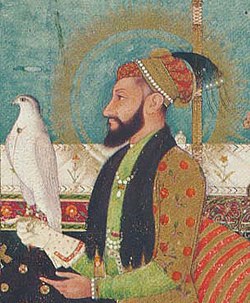
Last powerful Mughal emperor; expanded the empire but faced strong internal resistance.
Bahadur Shah II (1837–1857)

Last Mughal emperor; exiled after the 1857 revolt. Ended the Mughal era.
Expansion of Mughal Rule

- The expansion of Mughal rule in India began with Babur’s victory in 1526 at the First Battle of Panipat, marking the foundation of the Mughal Empire.
- His successors, especially Akbar (1556–1605), played a crucial role in expanding the empire.
- Akbar adopted a policy of conquest, diplomacy, and tolerance. He conquered Rajputana, Gujarat, Bengal, Kashmir, and the Deccan.
- His ability to form alliances with Rajput rulers through marriage and respect for local customs helped strengthen Mughal control.
- Later emperors like Jahangir, Shah Jahan, and Aurangzeb extended the empire even further.
- Aurangzeb pushed Mughal power deep into southern India, making it the largest empire in Indian history at its peak.
- However, constant wars, rebellions, and strict policies under Aurangzeb weakened the empire, leading to its slow decline after his death.
History of Mughal Rule

- The name 'Mughal' is derived from the term 'Mongol'.
- Babur,the founder of the Mughal Kingdom, was the descendant of the Turkish ruler Timur paternal way and the Mongol king Genghis Khan maternal way.
- It was the Europeans who started addressing this dynasty as 'Mughal' during the 16th century.
- In 1526, Ibrahim Lodi, the last ruler of the Lodi dynasty, and Babur, the ruler of Kabul, fought at Panipat in Haryana.
- In history, this battle is referred as the First Battle of Panipat.
- Babur laid the foundation of the Mughal rule in India through this victory.
Akbar - The Great Mughal Empire
- Akbar was a powerful ruler.
- He was loved by all.
- He administered equal justice without any distinction of high-low castes, familiar-unfamiliar.
- He considered Hindu/Christian/Muslim alike.
- He treated the strong with force and the weak with mercy
- He built Ibadat Khana in his new capital, Fatehpur Sikri to gather Scholars and dignitaries of various religions.
- He created Din-i-Ilahi, his visionary religion by combining the good aspects of all religions.
- He aimed to clarify the idea that all visions are for the welfare of human beings.
- He abolished of the religious tax called 'Jaziah'.
- Raja Todarmal, Raja Mansingh, Raja Bhagavandas and Birbal were prominent among those who held high positions in the royal court of Emperor Akbar.
The Mughal Army

- Mansabdari' was the military system implemented by Akbar to maintain his kingdom.
- According to this system, each officer had a regiment under him.
- The title 'mansab' refers to the number of cavalry each officer is required to maintain.
- The rank of the Mansab was determined by the number of soldiers to be maintained.
- This system was implemented as an alternative to maintain army paying directly from the state exchequer.
- Mansabdars were allotted land according to their ranks.
- The Mansabdar maintained his army by collecting tax from land allotted to them.
- Mansabdari system was implemented to achieve the support of the Nobles and the military which was necessary to carry forward the regime strongly.
The Mughal Administration

- Akbar's created such an administrative structure.
- The emperor was the sovereign authority of the country, the commander-in-chief,the law-maker and the supreme judge.
- There were no separate courts for the administration of justice as today.
- Local religious scholars (Qazi) investigated and adjudicated disputes.
- Those who were dissatisfied with this decision had the opportunity to complain directly to the emperor.
- Ministers and Heads of departments were appointed to advise the king on administrative matters.
Socio-Economic Status

Social Status
- A feudal social system existed at that time.
- Society was divided into different stratas.
- The common man was at the bottom of society with the king at the top.
- Standard of living of the people depended on wages and income.
- Most of the people were farmers.
- Caste system existed among them.
- Each caste had its own customs and rituals.
- There existed wide differences in the way of life,food habits and clothing of people from place to place.
Economic Status
- The Agricultural achievements were the basis for this economic progress.
- Rice, wheat, barley,sugarcane, cotton and oilseeds were the major agricultural products of the time.
- The farmer was not evicted from the land as long as he paid tax.
- The use of technology and new tools enriched the agricultural sector during the Mughal period.
- The Persian wheel and canals were widely used for irrigation.
- Increased agricultural productivity accelerated trade and urbanisation.
- Gujarat was the gateway of foreign goods.
- The main export items were textiles, muslin, sugar and rice.
- Water transport made significant progress during this period.
The Major Cities of the Mughal

| Mughal cities | Present countries |
|---|---|
The Mughal Culture

- Dara Shukoh, the son of the Mughal ruler Shah Jahan translated the Mahabharata, into Persian.
- The Taj Mahal, Agra Fort and Red Fort are examples of the fusion of Indian Architectural style with the Persian style.
- Urdu,a new language, was also formed by the fusion of Persian and Hindi languages.
- Hindustani music also originated.

History of Vijayanagara

- Vijayanagara (City of Victory) was the name of both a city and a kingdom.
- Established by in 1336 CE by Harihara and Bukka on the banks of the Tungabhadra River.
- Capital city: Hampi, in present-day Karnataka.
- Formed to protect Hindu culture and temples from northern invasions.
- Known for religious tolerance and patronage of art and learning.
- Grand temples like Vittala Temple and Virupaksha Temple in Hampi.
- Known for stone chariots, music pillars, and Dravidian style.
- Hampi was destroyed in 1565 CE,leading to the empire's fall.
The present-day Indian states included in the city of Vijayanagara


- Karnataka (main center)
- Andhra Pradesh
- Telangana
- Tamil Nadu
- Kerala (southern fringes)
- Maharashtra (southern parts)
- Goa
Prominent Vijayanagara Rulers

Sangama Dynasty
- Harihara
- Bukka
Saluva Dynasty
- Narasimha Saluva
Tuluva Dynasty
- Vira Narasimha
- Krishna Deva Raya
Aravidu Dynasty
- Tirumala
- Venkita I
Krishna Deva Raya

- Krishna Deva Raya (1509-1529) was the most famous ruler of the powerful and wealthy kingdom of Vijayanagara.
- The reign of Krishna Deva Raya was a period of imperial expansion and development of the empire.
- Lot of construction works were carried out during his reign.
- Apart from constructing more facilities in the capital city of Hampi, he also built new forts, palaces and temples.
- Another important reason for his fame was religious tolerance.
- All religions were treated equally by him.
- The people of different religions were allowed to follow their beliefs freely.
- Art, literature, and cultural spheres also witnessed remarkable progress under Krishna Deva Raya.
- He had extraordinary erudition and authored the works 'Amuktamalyada' and 'Jambavatikalyanam'.
- He promoted Telugu, Kannada and Tamil literature.
- Scholars known as 'Ashtadiggajas' adorned the court of Krishna Deva Raya.
The Administrative System

- Monarchy prevailed in Vijayanagara administrative system.
- For administrative convenience, the country was divided into mandalam (provinces), nadu (districts),sthala (sub-districts) and grama (village).
- There was cabinet to help the king.
- The King had the power to demote and punish ministers.
- There were courts at various levels for the administration of justice.
- The appellate authority was the King himself.
- Minor offences and labour disputes were dealt with by the village courts themselves.
The Military System

- Nayakas and Amara-Nayakas played an important role in the administration of Vijayanagara.
- The military commanders were known as 'Amara-Nayakas'.
- The Kings allotted lands known as 'Amara' to them.
- The administration of Amara was carried out by Amara-Nayakas.
- Amara-Nayakas had the right to collect taxes from these areas.
- The Amara-Nayakas paid a fixed amount to the king.
- They also maintained a certain number of foot soldiers (infantry), horses and elephants.
Socio-Economic Condition
Social Condition
- Vijayanagara society consisted of various castes and religions.
- Brahmins were the dominant group in the society.
- They were entitled to the revenue from the land allotted to the temples.
- Brahmins used to lead the rituals and religious ceremonies in the temples.
- Other sections of the society were mainly engaged in agriculture, trade and handicrafts.
- Kings employed women to prepare accounts of the royal palace and decorate gardens.
- Polygamy prevailed among the wealthy.
- Child marriage and the practice of sati were also prevalent in society.
Economic Condition
- The main occupation of the people was agriculture.
- Silk and cotton clothes were commonly used.
- Irrigation was provided in the arid areas around Vijayanagara.
- The Kamalapuram lake, constructed in 15th century CE, Hiriyakanal and the dam across the Tungabhadra river strengthened the agricultural sector.
- The land was surveyed and taxed according to productivity.
- Apart from land tax,the main sources of revenue to the government were professional tax, building tax,license fees of various kinds and fines imposed by courts.
Trade and Centres

- Traders from different parts of India and the world flocked to the famous city of Vijayanagara.
- The rulers greatly encouraged foreign trade.
- The Portuguese and the Arabs had monopoly over foreign trade.
- Trade was also done with China and Sri Lanka.
- The trade of horses, brought from Arabia and Central Asia, was mainly done by the Arabs.
- Horses were an important item of trade.
- Local traders involved in horse trading were known as 'Kuthirachettis'.
- The Portuguese pushed out the Arabs and took control of this trade.
- Income from trade strengthened the nation's economy.
- Chinese pottery found in the city indicates trade relations with China.
Cultural Life of Vijayanagara

- During the Vijayanagara period, the cultural life also made great progress.
- Many schools were established for the study of Vedas and Sastras.
- The Vijayanagara period, witnessed unprecedented growth in the fields of art, architecture, sculpture, literature and music.
- Kings like Krishna Deva Raya were patrons of art and literature.
- The 'Dravidian style of sculpture' was dominant during this period.
- Another important feature of Vijayanagara style of sculpture was the gigantic temple gates known as 'Gopurams'.
- The field of literature also made tremendous progress during this period.
- Telugu literature was the most flourished one.
- Numerous Sanskrit works were also translated into many regional languages during this period.
Mughal-Vijayanagara Comparison
Mughal vs Vijayanagara Empire
| Aspect | Mughal Empire | Vijayanagara Empire |
|---|---|---|
| Region | Northern & Central India | Southern India (mainly Karnataka, Andhra Pradesh, etc.) |
| Founder | Babur (1526) | Harihara I & Bukka (1336) |
| Capital | Agra, later Delhi | Hampi (Vijayanagara) |
| Religion | Islamic (Sunni), tolerant of other religions | Hindu, tolerant of other religions |
| Famous Rulers | Akbar, Jahangir, Shah Jahan, Aurangzeb | Krishnadevaraya, Devaraya II |
| Architecture | Taj Mahal, Red Fort, Mughal Gardens | Virupaksha Temple, Vittala Temple, Stone Chariot |
| Art & Culture | Persian-influenced art, Urdu poetry, miniatures | Telugu, Kannada, and Sanskrit literature, temple arts |
| Decline | Gradual decline after Aurangzeb (1707) | Fell after Battle of Talikota (1565) |
| Trade Links | Central Asia, Persia, Europe | Arabia, China, Portuguese, Southeast Asia |
| Military | Strong cavalry, artillery, trained infantry | Strong fortresses, war elephants, skilled archers |
Mughal-Vijayanagara Growth
Growth of Mughal vs Vijayanagara Empires

| Aspect | Mughal Empire | Vijayanagara Empire |
|---|---|---|
| Period of Rise | 1526, with Babur's victory at the First Battle of Panipat | 1336, founded by Harihara and Bukka |
| Fast Expansion | Under Babur, Humayun, and Akbar | Under Harihara II, Devaraya II, Krishnadevaraya |
| Golden Age | Akbar (1556–1605): power, culture, and stability | Krishnadevaraya (1509–1529): prosperity and trade |
| Territorial Spread | Most of India by 17th century | South India (Karnataka, Andhra Pradesh, Tamil Nadu, Goa) |
| Decline | Gradual decline after Aurangzeb (1707) | Sudden decline after Battle of Talikota (1565) |
| Legacy | Monuments (Taj Mahal), administration, Mughal art | Hampi temples, vibrant trade, Dravidian architecture |
IMPORTANT PERSONALITIES

JEAN BAPTISTE TAVERNIER
- A French traveller visited India during the Mughal period.
- Recorded the social conditions and life style of the people at the Mughal time.
- His writings are valuable historical records about Mughal India, especially during the reign of Shah Jahan and Aurangzeb.

RALPH FITCH
- He was one of the first Englishmen to travel to India and Southeast Asia by land and sea
- Fitch visited several parts of the Mughal Empire, including Agra, Allahabad, and Varanasi, during the reign of Emperor Akbar.
- His experiences helped in the formation of the English East India Company in 1600.

JESUIT PRIEST PIERRE JARIC
- Pierre Jarric was a Jesuit priest from France in the early 17th century.
- Jarric's writings praised Akbar for his religious tolerance, intellectual curiosity, and justice-based rule.
- He introduced European readers to the greatness of Mughal India, its wealth, administration, and cultural richness.

IBRAHIM LODY
- Ibrahim Lodi was the last ruler of the Lodi dynasty in North India.
- In 1526, Ibrahim Lodi was defeated and killed by Babur.
- This battle marked the end of the Delhi Sultanate and the beginning of the Mughal Empire in India.

DARA SHUKOH
- He was the eldest son of Mughal Emperor Shah Jahan and Empress Mumtaz Mahal.
- Dara was a deeply spiritual scholar who studied Islam, Hinduism, and other religions.
- He translated Upanishads and Bhagavad Gita into Persian, hoping to find harmony between Hinduism and Islam.

ABUL FAZAL
- He was the most trusted minister and scholar in Akbar’s court.
- He supported and helped shape Akbar’s policy of Sulh-i-Kul (peace with all).
- He was the author of the famous "Akbarnama", a detailed history of Akbar’s reign, and "Ain-i-Akbari", which described the administration, culture, and economy of the Mughal Empire.

BARBOSA
- Duarte Barbosa was the Portuguese traveler who visited the Vijayanagara Empire in the 16th century.
- Barbosa described the empire as a rich and grand kingdom, famous for its bustling markets and strong fortifications.
- His writings give valuable information about the social life, trade, and culture of Vijayanagara during its peak.

DOMINGO PEAS
- Domingo Paes was a Portuguese traveler who visited the Vijayanagara Empire around 1520.
- He described the empire as wealthy, well-organized, and grand, with impressive temples and markets.
- His travel account is an important historical source about the life and culture of Vijayanagara during Krishnadevaraya's rule.
Architecture during the Mughal Period

TAJ MAHAL
- The Taj Mahal was built by Mughal Emperor Shah Jahan in memory of his beloved wife Mumtaz Mahal.
- It is famous for its symmetry, dome, and beautiful gardens along the Yamuna River in Agra.
- It is one of the Seven Wonders of the World and attracts millions of tourists every year.

RED FORT
- The Red Fort (Lal Qila) was built by Mughal Emperor Shah Jahan in 1648 when he moved his capital from Agra to Shahjahanabad (Old Delhi).
- It is made of red sandstone, which gives it its name.
- It was the center of Mughal rule for about 200 years.

AGRA FORT
- Agra Fort was built in 1565 by Mughal Emperor Akbar as a military stronghold and royal residence.
- It is located on the banks of the Yamuna River in Agra, Uttar Pradesh.
- The fort is made of red sandstone and later additions by Shah Jahan included white marble palaces.
Architecture during the Vijayanagara

LOTUS MAHAL
- Lotus Mahal is a beautiful two-storeyed structure in Hampi with an elegant blend of Hindu and Islamic architecture.
- It is named after its lotus-like shape, with arches and dome resembling lotus petals.
- The Mahal was used as a recreation place for royal women of the Vijayanagara Empire.

QUEEN'S BATH
- Queen's Bath is a large, ancient bathing complex built for the royal women of the Vijayanagara Empire in Hampi.
- It has a sunken central pool surrounded by an enclosed corridor with ornate balconies and arches.
- The structure is designed with excellent water flow and drainage systems, showing advanced engineering of the time.

VIRUPAKSHA TEMPLE
- Virupaksha Temple is one of the oldest and most important temples in Hampi, dedicated to Lord Shiva.
- It features a tall gopuram (gateway tower) and stunning carvings that reflect Dravidian architecture.
- The temple is still active for worship and attracts pilgrims and tourists from all over the world.
MODEL QUESTIONS
Activity 1
1.Which Mughal emperor implemented the Mansabdari system ? ( Score: 1)
2.Who was the founder of the Mughal Empire in India ?( Score: 1 )
3.What is ‘sulh-i-kul’? ( Score: 1 )
The Cultural Integration of Mughal rule
"The Taj Mahal, Agra Fort and Red Fort are examples of the fusion of Indian Architectural style with the Persian style brought here by the Mughals. Urdu, a new language, was also formed by the fusion of Persian and Hindi languages during this period. Hindustani music also originated as a result of this synthesis."
4. Name two languages that blended during the Mughal era. ( Score: 2 )
Activity 2
1.Which city was known as the capital of the Vijayanagara Empire ?( Score: 1)
2.List out the present-day Indian states included in the city of Vijayanagara from the map? ( Any 4 ) ( Score: 2 )
- Karnataka (main center)
- Andhra Pradesh
- Telangana
- Tamil Nadu
- Kerala (southern fringes)
- Maharashtra (southern parts)
- Goa
Krishna Deva Raya (1509-1529)
'The king allowed such freedom that anyone, irrespective of being Christian, Jew, Moor or Heathen can come and go and live according to his creed without being annoyed in any way. Equality was ensured by the judicial system present there.
- Barbosa
(Portuguese traveller who visited India)
3.Who was Krishna Deva Raya ? ( Score: 2 )
- Krishna Deva Raya was a famous ruler of the Vijayanagara Empire.
- He is known for his patronage of arts and religious tolerance.
Activity 3
The Trade Policies
"The Mughal and Vijayanagara empires had active trade policies that boosted their economy. The Mughals promoted both inland and foreign trade, encouraging merchants and building roads and caravanserais to support trade across Asia and Europe. Ports like Surat and Bengal were major trade centers. The Vijayanagara Empire, located in South India, also flourished through trade, especially in spices, textiles, and precious stones. It had strong trading ties with Arabia, China, and Portugal, and ports like Hampi and Goa played key roles in international trade. Both empires welcomed traders, which helped their wealth and cultural growth."
1.What were the main exports of the Mughal Empire ? ( Any 4 ) ( Score: 2 )
- Textiles
- Muslin
- Sugar
- Rice.
2.Describe the trade practices in Vijayanagara ? ( Any 3 ) ( Score: 3 )
- Vijayanagara was an important trade center.
- They traded goods like spices, cotton, and gems and they exported textiles and imported horses.
- Trade was done with other parts of India and foreign countries like Arabia, China, and Sri Lanka.
Activity 4
1. Who is the author of 'Ain-i-Akbari'( Score: 1)
2. Who were the local religious scholars investigated and adjudicated disputes during Mughal period ?( Score: 1 )
3.What are the features of Amaranayaka System prevailed during the Vijayanagara Rule ? ( Any 3 ) ( Score: 3 )
- Nayakas and Amara-Nayakas played an important role in the administration of Vijayanagara.
- The military commanders were known as 'Amara-Nayakas'.
- The Kings allotted lands known as 'Amara' to them.
- The administration of Amara was carried out by Amara-Nayakas.
- Amara-Nayakas had the right to collect taxes from these areas.
- The Amara-Nayakas paid a fixed amount to the king.
- They also maintained a certain number of foot soldiers (infantry), horses and elephants.
Activity 5
Mughal Empire and Vijayanagara Empire during the Medieval India.
"The Mughal Empire was a powerful Muslim empire that ruled much of India from the early 16th to the 18th century. It was founded by Babur in 1526 after the Battle of Panipat. The Mughals were known for their strong central administration, rich culture, and grand architecture like the Taj Mahal. The Vijayanagara Empire was a strong Hindu kingdom in South India, founded in 1336 by Harihara and Bukka. It became a major center for trade, art, and architecture. The capital city, Hampi, was famous for its temples, forts, and busy markets. The empire declined after the Battle of Talikota in 1565."
1. Compare the Mughal rule in North with the Vijayanagara rule in South India during Medieval India.? ( Score: 4 )
| Aspect | Mughal Empire | Vijayanagara Empire |
|---|---|---|
| Region | Northern & Central India | Southern India (mainly Karnataka, Andhra Pradesh, etc.) |
| Founder | Babur (1526) | Harihara I & Bukka (1336) |
| Capital | Agra, later Delhi | Hampi (Vijayanagara) |
| Religion | Islamic (Sunni), tolerant of other religions | Hindu, tolerant of other religions |
| Famous Rulers | Akbar, Jahangir, Shah Jahan, Aurangzeb | Krishnadevaraya, Devaraya II |
| Architecture | Taj Mahal, Red Fort, Mughal Gardens | Virupaksha Temple, Vittala Temple, Stone Chariot |
| Art & Culture | Persian-influenced art, Urdu poetry, miniatures | Telugu, Kannada, and Sanskrit literature, temple arts |
| Decline | Gradual decline after Aurangzeb (1707) | Fell after Battle of Talikota (1565) |
| Trade Links | Central Asia, Persia, Europe | Arabia, China, Portuguese, Southeast Asia |
| Military | Strong cavalry, artillery, trained infantry | Strong fortresses, war elephants, skilled archers |
2.Who was the first ruler of the Sangama dynasty in Vijayanagara? ( Score: 1)
More Questions and Answers
a) Humayun
b) Babur
c) Shah Jahan
d) Akbar (Score: 1)
a) Sarkar, Suba, Pargana, Grama
b) Suba, Sarkar, Pargana, Grama
c) Grama, Pargana, Sarkar, Suba
d) Pargana, Sarkar, Suba, Grama (Score: 1)
a) A new religion by Akbar combining all religions
b) Military title
c) A tax policy
d) An architectural style (Score: 1)
a) Krishna Deva Raya
b) Harihara
c) Bukka
d) Narasimha Saluva (Score: 1)
a) Razm-Nama
b) Ain-i-Akbari
c) Akbar Nama
d) Tuzuk-i-Jahangiri (Score: 1)
a) Land tax
b) Salt tax
c) Import duties
d) Donations (Score: 1)
a) Abul Fazal
b) Tavernier
c) Domingo Paes
d) Ralph Fitch (Score: 1)
- Early rulers – Babur (founder), Humayun (regained the throne after exile).
- Great rulers – Akbar (expansion and tolerance), Jahangir (arts and justice), Shah Jahan (monuments), Aurangzeb (largest extent).
- Built magnificent structures like the Taj Mahal, Red Fort, and Jama Masjid.
- Promoted the use of white marble, intricate carvings, and decorative inlay work in Mughal architecture.
- An administrative system introduced by Akbar to rank and classify Mughal officials.
- Each mansabdar was assigned a rank determining their salary, status, and number of soldiers they had to maintain.
- Rice
- wheat
- barley
- sugarcane
- cotton
- oilseeds
- Followed a policy of religious tolerance, treating all religions with respect.
- Abolished jizya tax on non-Muslims and encouraged interfaith dialogues.
- Introduced Din-i-Ilahi, aiming to blend the best elements of various religions.
- Appointed people of different faiths to high administrative positions.
- Fought between Babur (founder of Mughal Empire) and Ibrahim Lodi (Sultan of Delhi).
- Babur used advanced artillery and clever battle formations, which were new to India.
- The battle ended with Ibrahim Lodi’s defeat and death.
- Marked the beginning of Mughal rule in India.
- Land revenue – Main source, collected from farmers based on land productivity.
- Trade taxes – Levied on goods imported and exported.
- Custom duties – Charged at ports and trade routes.
- Tributes – Received from subordinate rulers and conquered territories.
- Combined Persian, Central Asian, and Indian styles in design and decoration.
- Built grand monuments like the Taj Mahal and Fatehpur Sikri, blending Islamic domes with Hindu chhatris and carvings.
- Used decorative techniques like pietra dura (stone inlay) and intricate floral patterns from multiple traditions.
- Patronised artists from different regions, creating a fusion of artistic traditions.
- Created a loyal and efficient bureaucracy by ranking officials based on merit.
- Ensured a steady supply of troops for the empire’s defence and expansion.
- Simplified revenue collection by linking jagirs to officials’ ranks.
- Helped maintain central control over provincial administration.
- Built by Akbar as the Mughal capital in the late 16th century.
- Showcases a blend of Persian, Islamic, and Indian architectural styles.
- Contains important structures like Buland Darwaza, Jama Masjid, and Panch Mahal.
- Served as a symbol of Akbar’s power, vision, and cultural integration, though later abandoned due to water scarcity.
- Court historian and close advisor of Emperor Akbar.
- Author of Akbar Nama and Ain-i-Akbari, recording Mughal history, administration, and culture.
- Played a key role in formulating Akbar’s policies of governance and religious tolerance.
- His works provide valuable historical records of the Mughal period.
-
Mughal Empire
- Society divided mainly into nobility, middle class (traders, artisans), peasants, and labourers; influenced by Persian and Central Asian traditions.
- Religious diversity with Hindus, Muslims, and others living under a policy of tolerance (especially under Akbar).
- Society organised into kings, nobles, warriors, traders, farmers, and artisans; deeply rooted in Hindu caste system.
- Predominantly Hindu society, but respected and included people of other faiths in administration and trade.
Vijayanagara Empire
-
Form of Government :
- Both were monarchies with the king/emperor holding supreme power.
- Mughals: Suba → Sarkar → Pargana → Grama.
- Vijayanagara: Rajya → Nadu → Sthala → Grama.
- Mughals used the Mansabdari system.
- Vijayanagara used the Amaranayaka system.
- Mughals appointed mansabdars and governors directly;
- Vijayanagara granted land to amaranayakas in return for military service.
Territorial Division:
Military & Revenue:
Officials:
- Increased productivity – Better irrigation and farming methods boosted crop yields.
- Expansion of trade – Surplus produce encouraged local and long-distance trade.
- Stable revenue – Higher output increased land revenue for the empire.
- Growth of markets – Agricultural surplus supported urban growth and flourishing markets.
-
Akbar:
- Respected all religions.
- Held interfaith dialogues.
- Abolished Jaziya tax on non-Muslims.
- Founded Din-i-Ilahi to promote harmony among different faiths.
- Devout Hindu but honoured all religions.
- Supported scholars of various faiths.
- Patronised temples, as well as literature and art
- Promoted different cultural traditions.
Krishna Deva Raya:
- Built grand temples like Vitthala Temple and Hazara Rama Temple, showcasing Dravidian architectural style.
- Used intricate carvings and large gopurams (tower gateways) that became iconic in South Indian temple design.
- Reflected the empire’s religious devotion, cultural richness, and prosperity.
- Influenced later South Indian architecture, leaving a lasting artistic legacy.
- Literature Flourished in Kannada, Telugu, Sanskrit, and Tamil under royal patronage.
- Built magnificent temples, sculptures, and gopurams with intricate carvings.
- Supported classical traditions like Carnatic music and Bharatanatyam.
- Encouraged and respected diverse faiths, enriching cultural exchange.
-
Akbar
- the emperor of Mughal Followed religious tolerance.
- Respected all faiths.
- Abolished Jaziya tax.
- Encouraged interfaith dialogues.
- founded Din-i-Ilahi to promote harmony among religions.
- The Empire of Vijayanagara.
- A devout Vaishnavite.
- Respected other religions.
- Patronised temples.
- Supported scholars of different faiths including Jainism and Islam.
- Both rulers showed religious tolerance.
- Akbar introduced reforms for interfaith unity.
- Krishna Deva Raya focused on patronising multiple faiths while remaining rooted in Hindu traditions.
Krishna Deva Raya
Conclusion:
-
Mansabdari (Mughal)
- Introduced by Akbar and officials called mansabdars were ranked and given jagirs (land revenue) instead of fixed salaries.
- Each mansabdar maintained a fixed number of soldiers for the empire.
- Amaranayakas were granted amaram lands in return for military service.
- Collected revenue from their lands and maintained troops for the king.
Amaranayaka (Vijayanagara)
-
1. Governance
- Akbar – Centralised administration, Mansabdari system, efficient revenue collection.
- Krishna Deva Raya – Strong central authority, Amaranayaka system, promoted agriculture and irrigation.
- Akbar – Expanded empire, increased trade, and stable economy through land revenue reforms.
- Krishna Deva Raya – Vijayanagara became a wealthy trade hub, known for diamonds, spices, and textiles.
- Akbar – Promoted art, literature, architecture (Fatehpur Sikri, Red Fort), encouraged cultural fusion.
- Krishna Deva Raya – Patron of literature in multiple languages, built grand temples (Vitthala, Hazara Rama).
- Akbar – Ensured fairness in courts, religious tolerance, abolished discriminatory taxes.
- Krishna Deva Raya – Provided justice to subjects, protected temples, and maintained law and order.
2. Wealth
3. Culture
4. Justice
| Mughal Administration | Vijayanagara Administration |
|---|---|
| Monarchy | Monarchy |
| Emperor held supreme power | King held supreme power |
| Centralised administration | Centralised administration |
| Mansabdari system for military and revenue | Amaranayaka system for military and revenue |
| Division of empire into Subas, Sarkars, Parganas, and Gramas |
Division of empire into Provinces (Rajyas), Nadu, Sthala, and Grama |
| Officials appointed and paid by emperor | Officials granted land in return for service |